
Chris Joseph
What is Mindfulness?
By Christopher Joseph

Mindfulness, or mindful awareness, is very much a current buzzword. Its benefits have been filling the columns of main stream media, it’s being talked about around the NHS and within many a workplace up and down the country… but what is it?
Jon Kabat-Zinn, author of “Wherever you Go, There You Are” and founder of the Massachusetts Centre for Mindfulness, often defines mindfulness as “moment by moment, non-judgemental awareness”.
Vidyamala Burch, author of “Living Well with Pain and Illness: The Mindful Way to Free Yourself from Suffering” and founder of Breathworks, has defined mindfulness as: “a state of present moment attention where you can clearly perceive thoughts, physical sensations, emotions and events at the moment they occur without reacting in an automatic or habitual way“.
There are of course as many ‘definitions’ of mindfulness as there are mindfulness practitioners, and there is even a debate as to whether it can even be defined? Jon Kabat-Zinn often refers to his description as an ‘evocation’ rather than a ‘definition’. This in itself it a valuable pointer: we can gain a conceptual understanding of mindfulness, but it’s not until we actually experience it that we begin to understand it and feel its benefits for ourselves and others.
On the Breathworks 8-week mindfulness course we discuss the topic of mindfulness in week 1, and the participants leave with some understanding of it. However, when those same people come back over the following weeks with personal stories of having experienced mindfulness then that understanding takes on a whole new depth. These stories range from “not kicking the dog!” to “responding with patience, rather than habitually reacting, to a challenging comment from the boss” to “moving towards the unpleasant yet intricate and changeable qualities of physical pain, whist at the same time remaining open to the beauty of a setting sun”.
Sometimes it’s easier to reflect on what mindfulness is not. Mindlessness takes far less explanation. The news is covered with local, national and global examples of it on a daily basis. However, reflecting in this way carries a danger, a danger that we mistakenly label our absence of ‘gross-mindlessness’ as mindfulness, a danger that we sell ourselves short and don’t fully open to the richness that life can offer in each and every moment.
As I sit here at my laptop right now, it’s 7:45am on a Sunday morning and my family are still in bed. There’s an interplay occurring between the rhythmic sound of the keys under my fingers, the whirr of the CPU, the morning birdsong outside my window and the electronic nursery rhyme player being activated by my daughter who has just roused from her sleep in the neighbouring room. I’m aware of the harsh pull of the monitor screen on my eyes, and the counter restorative effects of taking a brief break to glance up at the unfolding dance of the silver lined clouds as they reflect the bright light of the morning sun. I’m aware of the ebb and flow of my breath as I type these words and the deep rumbling of my belly as it awakens from its own slumber. I’m pulled between the desire to continue with my writing and the call of my own body to replenish its energy resources.
All that in just a few moments… no wonder they call it mindFULLNESS! The truth is of course that we have access to experiencing life as this rich tapestry at any moment we chose to. There are many mindfulness ‘doors’ that allow us access into the present moment. These include mindfulness of our breath and body, mindfulness of our thoughts and emotions, mindfulness of our movement, mindfulness of our daily activities, mindfulness of our surroundings and mindfulness of our relationships with ourselves and others. The mindfulness meditation practices taught on the Breathworks course are indeed just that – practices. The practices form a mindfulness ‘tool box’ which we can call upon at any time during our day. Through practice, mindfulness can gradually become our default way of living.
Mindfulness, for me, is about many things: It’s about awareness, and about authentically acknowledging my experience in every moment, irrespective of whether it’s pleasant or unpleasant. It’s about responding creatively, rather than reacting habitually, to my thoughts, feelings and emotions with openness, honesty and often courage. It’s about being in touch internally and externally and not getting caught up in the constant mind chatter that is often so very seductive. It’s about maintaining a balance to my life, and about pacing myself in my daily activities so that my energies don’t become depleted. It’s about responding with love and kindness towards myself and others, and acknowledging the true interconnectedness of us all. Ultimately, it’s about opening up a space in each moment, a space where things can be seen as they are, not as I’d like them to be, a space of stillness and of clarity, a place where I can make choices that are in line with my own values – a place of freedom.
Natures Role in Mindfulness
By Christopher Joseph
 “Look, over there on the mountain – A Dragon!” I shouted to the rest of the group as we scaled the Minford path up to the summit of Cadair Idris in the bright sunlight of Saturday afternoon. Some turned and looked, and acknowledged with their own delight the Dragon shaped shadow of the clouds on the mountain the opposite side of the valley. As I stood there three quarters of the way up the mountain with my back to Llyn Cau watching this incredibly realistic shadow of a dragon gradually unfold and then disappear, I felt great intrigue, wonder and awe and also at the same time very humble, small and insignificant.
These simultaneous feelings of awe and insignificance were repeated several times over the weekend ‘Close to Nature’ retreat on Cadair Idris: When watching the sun set over the sea beyond Barmouth, when listening to the sounds of the rain and wind on the tent during the night, and when smelling the muskiness of the swirling mist as it licked it’s way up the slopes and over the craggy rock outcrops the following morning.
The healing effects of spending time in nature have long been acknowledged. Regular walks in the countryside have been shown to provide real benefits to people both in terms of their physical and mental wellbeing, but what role can nature play in developing our own mindfulness practice?
After spending the first five weeks cultivating awareness and focus the second half of the 8-week Breathworks mindfulness course deals with broadening our awareness. An important part of this is becoming more aware of our surroundings. It is easy, however, to become complacent about our everyday surroundings – We often don’t really see what’s around us! It becomes all too familiar to us. Nature, however, with its great intrinsic beauty and ever changing form can often provide us with sufficient sensory delight to snap us out of our inner-world of mind-chatter by compelling us to fully engage with our senses and to open to the outer-world around us.
An important aspect of mindfulness practice is learning (or re-learning) to see, hear, touch, taste and smell things as if for the very first time.
This process of simply ‘taking in’ nature with bare attention in an untainted and unfiltered way can often feel anything but simple! We are taught to conceptualise things from a very young age in school and at home. We learn, for example, that this is a tree, this is a leaf and this is a rock. And yet, when I tell you that I have seen a tree you might nod in acknowledgement and say “Yes, a tree!”. However, on further examination it becomes quite evident how little I have really told you!
Concepts can of course be very useful and are important building blocks in the development of intelligence, but they can also get in the way. When we conceptualise things we split reality into parts. We make things static – My dragon was not the same as the dragon that the other people saw, and of course there was never a dragon in the first place!
Anthony de Mello in his book ‘Awareness’ recounts the words of the great Indian writer and speaker Krishnamurti: “The day you teach the child the name of the bird, the child will never see that bird again”. De Mello goes on to explain: “The first time the child seed that fluffy, moving object, and you say to him, “Sparrow”, then tomorrow when the child sees another fluffy, moving object similar to it he says, “Oh, sparrows. I’ve seen sparrows. I’m bored by sparrows.””
During weeks six and seven of the Breathworks course we practice listening to sounds and looking at objects not as a child but with the ears and eyes of a child. Nature performs an important role in the development of mindfulness since it provides us with such a rich opportunity to truly engage our senses, to look beyond any preconceived ideas and concepts that we might have and to take in all that is around us. It provides us with a wonderful smorgasbord on which to feast with all five of our senses.
In practicing awareness of our natural surroundings in this way with the bare untainted senses of a child we can gradually learn to extend this level of awareness and curiosity to our everyday more common surroundings including those that are man-made.
Through cultivating this level of awareness for our external landscape we can then begin to hold the pleasant and unpleasant aspects of our inner landscape of thoughts, emotions and physical feelings with a greater sense of equanimity and perspective. Through retaining an awareness of this backdrop of our outer experience even at times of inner turmoil we are far more likely to remain mindful, balanced and objective. In this respect, nature really does provide us with a wonderful opportunity to grow as human beings and to cultivate the sense of becoming ‘bigger containers’.
So… go and take a walk in nature today!
It certainly doesn’t have to be the top of a mountain or the depths of a forest. It doesn’t even have to be a new walk, since the constant flux of nature means that all walks are new. To quote Heraclitus: “No man ever steps in the same river twice, for it’s not the same river and he’s not the same man”.
When you go however, remember to take not only the sight of a child with you but their hearing, touch, taste and sense of smell as well, for as Richard Wilkins points out in the following poem, there is a reason why we don’t see Angels.
Why we don’t see Angels
Did you ever see the fragrance of a rose?
Did you ever see the wind that pushes clouds across the sky?
Did you ever see the perfect note of a black bird’s song?
Did you ever see the tender love that touched your heart?
Richard Wilkins
Mindful Parenting
By Christopher Joseph

“Every day our children spread their dreams beneath our feet – we must therefore tread softly!”
This quote by Ken Robinson, who is a world leading speaker on the development of education, creativity and innovation, is pinned to the back of my kitchen cupboard along with a few hundred other ones! But, this one in particular strikes me every morning when I reach for the breakfast bowls. It serves to remind me of the great responsibility that I have as a father. Sometimes the enormity of this responsibility feels overwhelming and at times even a burden, but at other times I realise what an incredible opportunity I have to contribute to the nurture and development of a young individual in this world, and then I feel very privileged. Sometimes I get it right, sometimes I don’t, but my intentions are always positive.
I have two children with my wife Sharon. Aled is six and Anwen is almost three. Aled goes to a local Welsh school and I currently share the care of Anwen with a local childminder, as my wife works as a full-time teacher.
The quality of the time that I’m able to spend with Aled and Anwen varies immensely, and what I’ve come to realise is that that quality is dependent not on the activity we’re engaged in but on my own state of mind when I’m with them. If I have a lot on my mind, then the degree to which I am able to be fully present in body and mind, and parent mindfully is severely eroded, and looking after them can sometimes feel like a chore. If I am able to be fully present, however, and completely engage with them, then the time we spend together can transform into what can often feel like a spiritual practice.
Over time I have learnt that the degree to which I am able to maintain this open and aware presence for them is dependent on two main factors: The frequency and depth of my own mindfulness practice and the amount of ‘other stuff’ I have going on in my life. This ‘other stuff’ more often than not relates to my work. As a friend recently commented, running stress reduction mindfulness courses can actually be very stressful! This is because it involves all of the things such as marketing, administration and accounts that go along with running any other small business.
But, so what? Isn’t it quite natural for us to have things on our mind? Does it really make a difference whether we are fully present for our children or not? As long as they are safe and have toys to play with it’s okay, isn’t it? They know we love them, don’t they? …Maybe!
These justifications of the mind are quite natural but then, as so often happens, something comes along and cuts through it all, and the veils of delusion fall away. This happened to me recently when I read an article by Buddhist monk and peace activist Thich Nhat Hanh. (http://www.dailygood.org/more.php?n=4765a).
In his article he says:
“The most precious gift you can give to the one you love is your true presence. What must we do to really be there? Those who have practiced meditation know that meditating is above all being present: to yourself, to those you love, to life.”
He then asks: “Do you have enough time to love?”
My honest response to this was: “Sometimes!” And, furthermore, the stark realisation that I took away from this article was that love was an ongoing process that could potentially imbue all of my communication with my children, in all of its forms, be it verbal or non-verbal. Love after all is a verb. This, however, is only true if I am able to be present for them, and if I am not present, then how can I love?
It’s not easy of course. It never is. The things that often preoccupy my mind when I’m with my children and sit with me during meditation are the things that pay the bills! But, a question that I always carry with me, and one that I don’t think we should stop asking ourselves is: “Can I simplify my life?”
The answer for me at this present time is yes! I have already simplified my life since leaving behind the pursuit of an academic career in University. I am far more centred, content and happy since doing so, but there is always more that I can do, and am going to do, to simplify it further.
One of the corner stones of mindful parenting in my opinion, therefore, is our ability to be present for our children. I think that a big part of ensuring presence is not just practicing the art of present moment attention through meditation, but also taking whatever action is necessary to provide ourselves with enough space in which to be present in. What this means in practice for me is allocating sufficient time to simply be with my children, as free from distractions as possible, rather than trying to cram parenting time into an already busy schedule. The most precious gift that I think we can give our children, or anyone for that matter, is the ability to be present for them.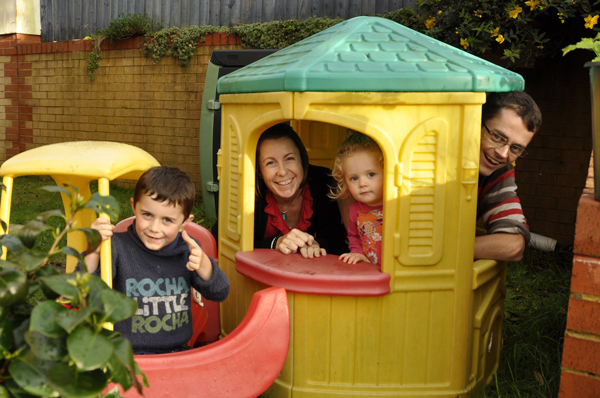
I think space is very important. Not only do we need to give ourselves space to parent mindfully, but I think our children also need space to be children mindfully! It’s a challenge as a father these days not to be overly influenced by the negative media portrayal of the so called ‘state of our society’, and the perceived dangers that are supposed to exist ‘out there’ for children.
The word balance comes to mind here, and that of course means different things to different people. As an example, we live on a road in a modern housing estate which has a cul de sac at the end. We have let Aled play on his bike out on the pavement by himself since he was 4, but we wouldn’t let him play on the busy mountain road behind our house. So I think with space comes the necessary boundaries which serve to define that space. I therefore believe that the provision of clear boundaries is also an important part of mindful parenting. Personally, however, myself and my wife try and establish these boundaries based on our own perceptions and experiences of the world and potential dangers that may exist rather than what we read in the papers.
My son has a veracious appetite for asking questions and uncovering how things work. I think, in part, this is due to the space he has been given when growing up to explore, to experiment and to discover, as well as to make mistakes and to learn from those mistakes. I haven’t always got it right by any stretch of the imagination. Sometimes I’ve been over-controlling, over-critical, I’ve shouted and I’ve smothered rather than supported them. These times have largely been born out of my own fears, and my own negative mental states, rather than anything terrible Aled or Anwen have actually done. I often find myself apologising when I feel that I have acted unskilfully, and I think this is also another important part of mindful parenting – admitting when you’ve got it wrong and taking whatever action is necessary to make amends.
I feel that the desire to try and control situations and my children’s behaviour is strong as a parent. I believe this is mainly due to a failure on my part to see things from their point of view, to recognise their needs as well as my own, and to my resistance in accepting who and what they actually are at this very moment – i.e. children. What I have come to realise over time is that through trying to control their behaviour to meet my own expectations, by repeatedly telling them what to do, I am inadvertently and subconsciously sending them the message that I don’t trust them to decide for themselves. Children do of course need guidance since generally they don’t possess the maturity to fully appreciate the consequences of their actions on themselves and others. I believe this guidance, wherever possible though, should come from exemplification in our own behaviour as parents and role models, rather than from controlling commands or critical comments.
And this, once again, isn’t easy of course. I think that mindful parenting is possibly the hardest work in the world, but it’s also potentially the most rewarding. In many respects I think mindful parenting follows the Breathworks 5 Step Process of Mindfulness. Firstly we have to bring awareness to our parenting, not only present moment awareness, but also awareness of their needs, our needs and the interrelation between the two. Secondly we have to be open to the unpleasant aspects – and I don’t just mean the dirty nappies! We have to be mindful of the expectations that we carry for our children, no matter how subtle, and the ways in which these expectations can serve as obstacles to our full acceptance of them and their behaviour in the present moment – they are after all, as well as being ‘little angels’, individual human beings who are constantly developing and growing up in what is an ever increasing complex world. Thirdly, we should seek out and fully appreciate the pleasant aspects; the cute smiles, the innocent comments and the unconditional love. Fourthly, we must try and hold both the challenging ‘unpleasant’ aspects of parenting and the pleasant rewarding aspects together in some form of equanimity, without being excessively swayed and consumed by one or the other. And, through doing so, we arrive at the fifth stage of choice – the choice to respond creatively rather than react habitually to whatever parenting situations arise.
It is often said that life’s a stage and that living is a dance. As a father who is trying to parent mindfully I feel that my role is one of a support dancer in the wings: supporting them where necessary, picking them up when they fall over, and above all letting them dance their own dance in their own way on their own stage of life.
7 Myths of Mindfulness Meditation
By Christopher Joseph
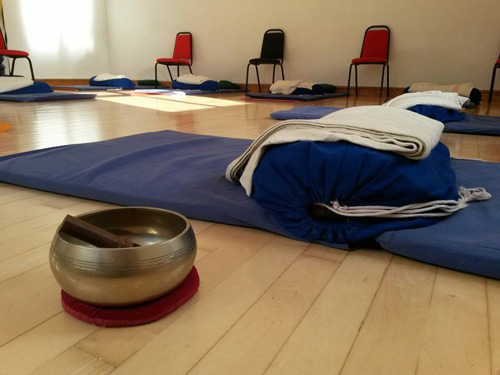 Meditation is a word that conjures up many different ideas and preconceptions for people. Some people may have images of peace loving hippies clad in floral patterned tops and psychedelic trousers. Others may envision shaven headed monks clad in colourful robes levitating! Mindfulness meditation isn’t quite as glamorous as either of those visions! Okay, so maybe I’m being a little facetious, but the truth is that there are still many misconceptions and myths surrounding meditation, many of which continue to be perpetuated by some areas of the media.
Below I have listed what I believe to be 7 of the most common misconceptions. It should be noted that there are many different forms of meditation, each with their own emphases. I am talking specifically here, however, about mindfulness mediation as applied to the area of health and well-being.
Myth 1: Meditation is just a relaxation technique.
Mindfulness meditation can frequently be accompanied by profound states of relaxation and by deep feelings of well-being, but it is far more than that, and the element of relaxation is probably best viewed as a useful by-product of meditation rather than its goal.
Mindfulness meditation involves the concentration of awareness on various items such as the breath, bodily sensations and movement. As we undertake these practices we cultivate the ability to become aware of our full spectrum of thoughts, feelings and emotions, be they pleasant, unpleasant or neutral, without getting embroiled or caught up in them. From this new, more objective, viewpoint we are better placed to respond creatively rather than react habitually to all of our experience. This new way of being results in a reduction in the secondary suffering and tension that we were previously heaping upon ourselves, often in an unaware and unconscious manner. A reduction in tension results in a state that we often label relaxation, and hence relaxation is a useful benefit of meditation, but it is the insight into the nature of our experience and the new, previously unforeseen, opportunities for exercising choice that is the true jewel of mindfulness meditation.
Myth 2: Meditation is for monks and wise ‘holy’ men, not for regular people.
It is true that most wise men meditate, but they don’t meditate because they are wise, they are wise because they meditate!
It is often quite common for ‘regular’ people to feel that they need to change their current circumstances before they can start to meditate – they often feel that they need to become more calm, concentrated or wise, or that they need to sort their life out first. You meditate so that you can develop more calmness, concentration and wisdom so that you’re in a better place to sort your life out… if indeed it needs sorting?
On Breathworks mindfulness courses we welcome everybody, whether they have meditated before or not, and whether they suffer from pain, illness or stress, or whether they simply wish to further enhance the quality of their lives. On previous courses which I have attended, assisted or led, participants have come from all walks of life. There have been, amongst others, counsellors, accountants, administrators, business people, students, teachers, lecturers, health workers, managers, doctors, nurses, volunteers and people who were retired or were currently out of employment and were working hard to stabilise their condition so that they could re-enter employment.
In short, meditation is for ‘regular’ people, just like me or you!
Myth 3: Meditation is selfish.
Meditation may well appear selfish at face value; there we are sitting on our chair or cushion in silence meditating whilst our loved ones are left to fend for themselves. We must look at the bigger picture, however, to uncover the actual truth.
In the event of an emergency on a plane we are told to place our oxygen mask on first before seeking to help others. This is analogous to the practice of mindfulness meditation. By ensuring our own health and well being we are better placed to help and serve others in this world.
Furthermore, through undertaking the Breathworks kindly awareness meditation practice we learn to develop mindfulness not only of ourselves but also of others. When choosing our actions in response to our circumstances we are therefore far more likely to consider the likely consequences to others as well as ourselves.
Meditation is therefore a selfless rather than selfish undertaking.
Myth 4: Meditation is about ‘blissing’ out.
Mindfulness meditation can produce lovely blissful feelings sometimes, but achieving these states is not the purpose of meditation and they don’t always occur.
The purpose of mindfulness meditation is to cultivate a state of present moment attention where you can clearly perceive thoughts, physical sensations, emotions and events at the moment they occur without reacting in an automatic or habitual way.
If you meditate with the purpose of achieving a blissful state, or any other state for that matter, then you will create tension around the need to fulfil the expectation that you have set up. The irony is that real peace, and even bliss, comes when you stop chasing it!
Myth 5: Meditation is done sitting in a full-lotus (cross-legged) posture.
Pictures of yoga instructors meditating cross-legged look good in newspapers and magazines, but they hardly represent the flexibility of the majority of people – myself included!
It is possible to meditate cross-legged, but it’s also possible to meditate whilst lying down, kneeling or sitting in a chair. The Breathworks body scan mindfulness meditation is usually done lying down, and the mindfulness of breathing and kindly awareness practices are usually done whilst kneeling on cushions or sitting in a chair.
The key is to find a position in which you are comfortable, or as comfortable as you can be if you suffer from a chronic pain condition. This will be slightly different for different people. When I teach mindfulness courses I give a brief posture workshop in which participants get the chance to try out different postures to find out what works best for them.
Myth 6: Meditation is about making your mind go blank and running away from reality.
No. Mindfulness meditation is about running straight into reality!
Step 2 of the Breathworks 5 step process involves opening up and moving towards the unpleasant aspects of our lives. Why would anybody want to do that I hear you ask? Because not doing it causes more pain and suffering than doing it over the long term. It’s a paradox. But, if we shut ourselves off from the unpleasant aspects of our lives then we also, almost by default, shut off from the pleasant aspects as well. Through moving towards the unpleasant and opening up to the true reality of the situation and our circumstances in each and every moment with an attitude of kindly awareness, we can place ourselves in a position to make better choices about how we respond to those circumstances.
As for making the mind go blank – I think it’s a common portrayal by the media that meditation is some form of wilful inward manipulation, akin to throwing a switch in your brain, and making your mind go blank… If so, can someone please tell me where the switch is! On the contrary, the mind rarely, if ever, goes blank. Meditation practice can in fact be fraught with thought, worry and desire and every other mental state and affliction that affects human beings. The content of our experience is not important, but what is important is our ability to observe and be aware of that content.
From the point of view of awareness, any state of mind is worth observing. Anger or sadness is just as interesting, valid and useful to look into as excitement or delight, and far more valuable than a blank mind.
Myth 7: A few weeks of meditation and all my problems will be sorted.
Unfortunately, mindfulness meditation is not a quick cure-all. That is not to say that you won’t start to see changes right away and that significant awareness, insight and progress cannot be made over a period of weeks of meditating. There is in fact now scientific evidence showing measurable positive changes to brain structure that can occur after just eight weeks of meditation. Usually, however, the shifts are far subtler and if you are sitting there looking for huge, instantaneous changes, you are far more likely to miss these subtle shifts altogether.
In my experience of teaching the Breathworks programme it is very common for course participants to begin to notice these subtle, and occasionally large, shifts as a result of attending the sessions and, in particular, by doing the daily home meditation practice between sessions. The nature and degree of these shifts of course vary from person to person.
In the years that I’ve been practicing mindfulness meditation I have also noticed a great deal of change in myself: In the level of present moment awareness that I have; in my ability to watch my thoughts and emotions; in the way in which I communicate with others; in my awareness of my surroundings and my ability to see the bigger picture, and in my ability to respond creatively rather than react habitually to life events… and, the good news is that I still have a long way to go!
My problems are far from being sorted, and they never will be entirely sorted. However, through practicing mindfulness meditation I feel that I’m better able to look at my problems rather than from them, and hence my tendency to get caught up in them is a lot less than it used to be.
I hope that you too get the impulse to learn mindfulness meditation, or, if you already have a meditation practice, that you are able to regularly acknowledge the positive effects that it’s having on you, so that you can continue to be sufficiently nourished and motivated to maintain your own practice and to follow your own path.
3 Top Tips for Dealing with Distractions
By Christopher Joseph
 We live in a modern day world that is full of stimuli. These stimuli can often serve as potential distractions which can disrupt the paced, centred and serene way in which we normally aspire to live our lives. We often rise to the sound of the alarm clock in the morning so that we can switch on the radio and fill our minds with the latest news headlines, before going downstairs to switch on our mobile phone and the morning TV. And so it can often continue – text message alerts, phone calls, pager bleeps, e-mails, messenger, facebook, twitter and so on… I’ve even heard recently that the latest cars are now speaking to their drivers to tell them when there’s a technical problem. This certainly brings a new meaning to the saying “Driven to distraction”!
These stimuli in themselves are not bad, but it seems that our insatiable appetite for information and our growing thirst for instant communication has meant that we as a nation are gradually (or rapidly if you consider the evolutionary timeframe) becoming ever more ‘alert’, and living in very ‘switched-on’ and ‘reactive’ ways.
The desire to live in this way is of course quite seductive. There is a certain physiological buzz that comes from feeling busy and reacting instantly to various stimuli such as a text message or an e-mail. There is also a psychological feeling of importance and connection with others as well as a sense that one is even being productive.
At times, I’m as guilty as anybody of occasionally slipping into this way of living – what I call the “Let me just do this quickly” syndrome! But, as a result of practicing mindfulness, I have found that I’m better able to detect when I am living in this anxious ‘on-call’ mode, where my attention and energy is scattered in many directions, and take steps to slip back out of it into the present moment. This is important, because I know from personal experience that too long spent living in this way can not only lead to a loss of mindfulness but to depleted energy levels and a degradation in health and well being. This reminds me of a poignant quote that I recently heard on Radio 2 from the Dalai Lama. When asked what surprised him most about humanity, he said:
“Man.
Because he sacrifices his health in order to make money.
Then he sacrifices money to recuperate his health.
And then he is so anxious about the future that he does not enjoy the present;
the result being that he does not live in the present or the future;
he lives as if he is never going to die, and then dies having never really lived.”
So, given that mobile phones, e-mail and TV are not going to go away overnight, (and I can’t say that I would want them to anyway, since they are useful when we use them rather than having them use us), how do we use mindfulness on a daily basis to deal with the very distractions that potentially erode our levels of mindfulness in the first place?
Below I have given what are my ‘3 top tips’ for mindfully dealing with distractions. Maybe they’re not top on your list but I do like to play with alliterations!
Top Tip 1: Set up the right conditions.
I think we need to start by at least giving ourselves a fighting chance!
If we are hell bent on constantly ingesting every single news headline, TV program, novel or magazine, instantly responding to every e-mail, text and voice message, and constantly checking our facebook wall or tweet feeds (if you have no idea what I’m talking about there then please don’t worry – congratulate yourself!) then we can have little hope of developing any deep and sustainable level of mindfulness. This is because mindfulness at the fundamental level requires the development of a moment by moment awareness of ourselves including our thoughts, feelings and emotions, and if we are constantly casting our attention outside of ourselves through distraction then this becomes very difficult, if not impossible, to achieve.
So, on a practical level what does setting up the right conditions mean? Well, it’s different for different people, but as a personal example, when I write these newsletters I switch off my e-mail alerts and internet browser, but I keep my mobile phone on. However, when I meditate I generally switch my computer and mobile off, and try and ensure that I’m alone in the house or that the children are sleeping. I generally keep my landline phone on, however, since in the day I’m first contact for my son’s school and the childminder.
So the message here is to take action wherever possible to reduce the potential for disruption to a level that feels appropriate for the activity on which we wish to concentrate.
Top Tip 2: Practice concentration.
Many people are aware that they live reactionary multi-tasking lifestyles where their attention is often wayward. They may even feel as if they live slightly ‘on-edge’ and sense a constant underlying level of mild anxiety as a result. Often, this is the reason that they take up mindfulness meditation – to practice concentration. And this is the important point here – one of the best ways of minimising distraction is to actively practice concentration.
The reason why concentration is such an important skill to develop is that so many of our so-called ‘distractions’ are actually self-created i.e. we seek them out! …No! I hear you cry. Me? Seek out distraction? But it’s true for all of us to some degree isn’t it? It’s called procrastination. It occurs when only a small part of our energy is invested in the task at hand, and the remainder goes searching for more interesting outlets. We start writing that report, doing the housework or meditating, and then our hand miraculously reaches for the internet explorer icon, the TV remote or the phone.
So, how can we develop better concentration? Yes, you guessed it! …Through meditating.
The ‘mindfulness of breathing’ and ‘body scan’ meditations, as taught on the Breathworks course, both lead to improved levels of concentration when practiced regularly. As the name suggests, the first involves resting our attention on our breath in various ways which become more and more refined as we progress through the four stages. The second involves bringing awareness to the various feelings and sensations in our body in the present moment. During these meditations the mind always wanders. The key point in respect to the development of concentration, however, is to repeatedly bring our attention back to the breath, or the body, time and time again, in a kind manner without chastising ourselves about it. In much the same way that the job of a pilot if to constantly steer the plane back on track through making small, gentle corrections, then our job as meditators is to gently, but consistently, bring our attention back to the particular focus of our meditation.
Through undertaking such practices we gradually develop a better aptitude for concentrating on whatever task is at hand, and rapidly and consistently renewing our concentration when our attention wonders, as it invariably does, without an hours internet surfing having passed in the meantime! Occasionally, when the activity really captivates us we might be fortunate to enter the state of ‘flow’, as described by Mihaly Csikszentmihalyi in the classic book of the same name. In this pleasurable state, our notion of time vanishes as we become completely engrossed and at one with whatever we’re doing.
Top Tip 3: Be flexible and creative.
The first two tips actually relate to reducing distractions; both external distractions (tip 1) and internal distractions (tip 2). But, they do, and will, still occur, so how should we then deal with them?
I think this depends on the nature of the distraction and the context of the situation. Sometimes it is useful to be flexible and to cultivate an attitude of being able to embrace the distraction i.e. bring it into our experience so that we can work with it, rather than against it. A good example of this is external noise such as traffic which can often occur when we are meditating. The degree to which this ‘unwanted’ noise becomes an intrusion on our practice is largely dependent on our attitude and response towards it. Someone once said to me that the only difference between sounds and noises is that one we want and the other we don’t want.
I remember a particular time on a 7-day residential Breathworks training retreat when individual members of the group were leading various meditations over the course of the week. Despite the retreat being held in the middle of the countryside, there was a very loud and intrusive banging noise being produced regularly by the piling machines that were being used to drive 6m long sheet piles into the ground to shore up the banks of the nearby canal, some 150m from our mediation cabin. If the meditation sessions were to be of any benefit then we had no other option other than to be flexible and to embrace the piling work by bringing the sound of the machinery into our awareness. Through allowing the sound to be there and cultivating a level of an interest in it, as if it were some form of modern day musical composition, I was able to work with it in a creative manner, rather than against it in a manner that would only have resulted in a build up of annoyance, anger and tension.
On this occasion the distraction, or potential distraction, was out of our control, but there are of course times when we can exercise control, such as when we are meditating and the washing machine is spinning, or the phone is ringing. We can in such situations either embrace the sounds, as above, or we can respond creatively by getting up and closing the door or by putting the answer phone on.
So, there is no doubt that we currently live in a world where the potential for distraction is massive. There are so many things vying for our attention that we can often feel like the proverbial juggler in the circus, busily multitasking our way through the day in a haze – feeling busy and sort of ‘productive’, and yet not getting around to the one thing that was truly important to us, the one thing that we really wanted to do, the one thing that we know would have been valuable to our own personal development.
It is possible, however, to step out of this unsatisfactory way of living, where our energy can often feel dispersed, and our vision for the future can often seem clouded. Through learning mindfulness, and through making the commitment to establish a regular meditation practice, it is possible to bring a sense of spaciousness, clarity and empowerment to our lives. When we are able to transcend our old state of habitual reactiveness to a new, more fulfilling, state of creative responsiveness, and when we are able to see opportunities and choices where previously we had seen none, then we can enter the realm of liberation, where we are free to take action based upon our own values and aspirations rather than whatever distractions shout the loudest.
Now that I’ve finished distracting you with this article, I’ll leave you get on with whatever you were doing!